Residential Plot vs Ready-to-Move House: Which Is Better for Homebuyers in Bhopal?

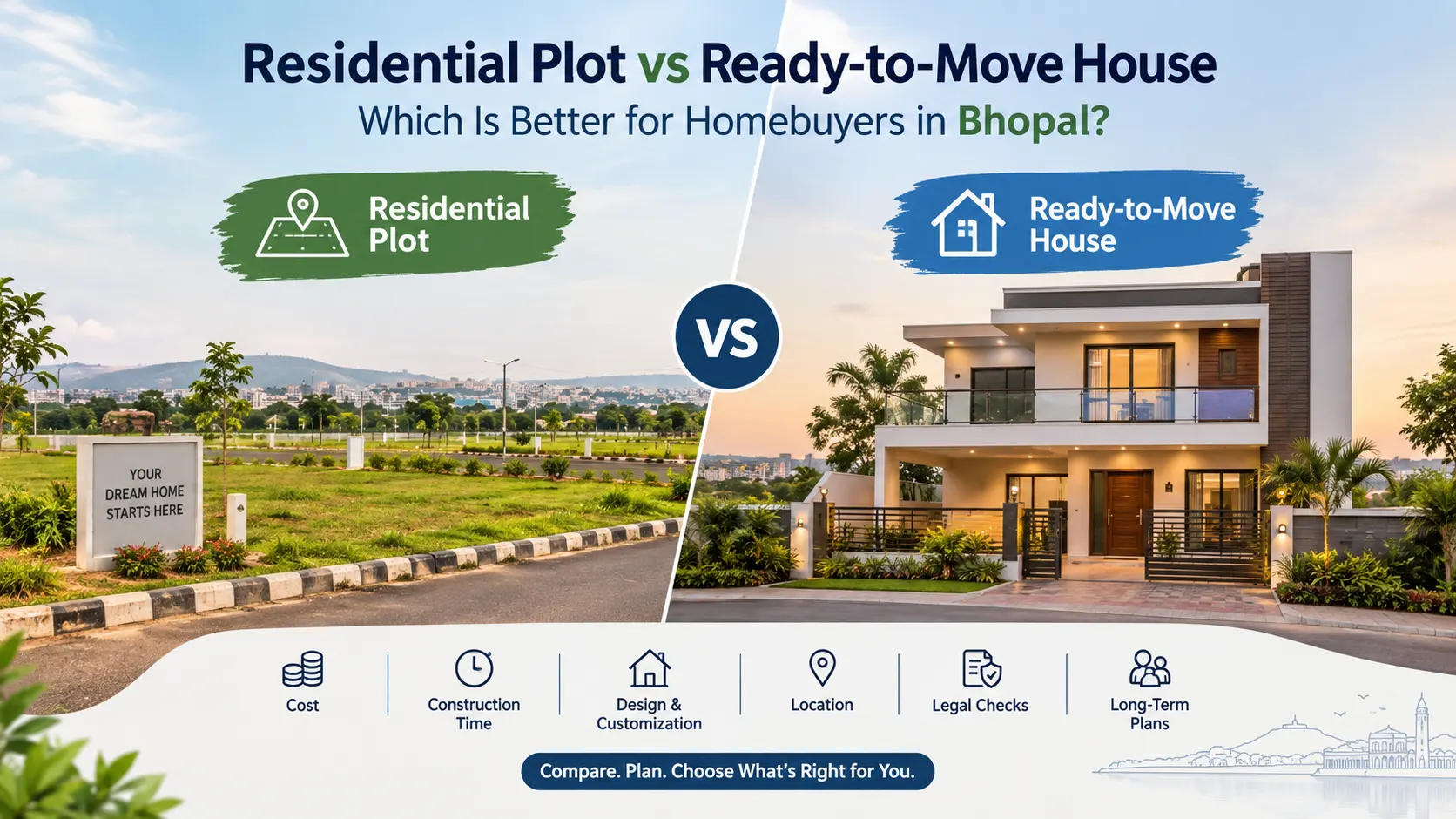
Choosing between a residential plot and a ready-to-move house in Bhopal depends on your budget, timeline, lifestyle, and future plans. A residential plot gives you more flexibility to design and construct a home according to your needs, while a ready-to-move house allows you to move in quickly without going through the construction process. Before making a decision, buyers should compare the total cost, location, legal documents, construction requirements, maintenance, and long-term plans.
Introduction
Buying a property is a major decision, especially when you are planning a home for your family.
In Bhopal, buyers generally consider two options: buying a residential plot and constructing a house later, or buying a ready-to-move house.
Both options have their own advantages and considerations. A ready house can save construction time, while a residential plot gives you the freedom to decide the design, size, rooms, parking and other features of your future home.
So, which option should you choose?
The answer depends on your budget, requirements, preferred location and how soon you want to move into your home.
What Is a Residential Plot?
A residential plot is a piece of land purchased for constructing a residential property.
After purchasing the plot, the owner can plan and construct a house according to applicable local rules, approvals and personal requirements.
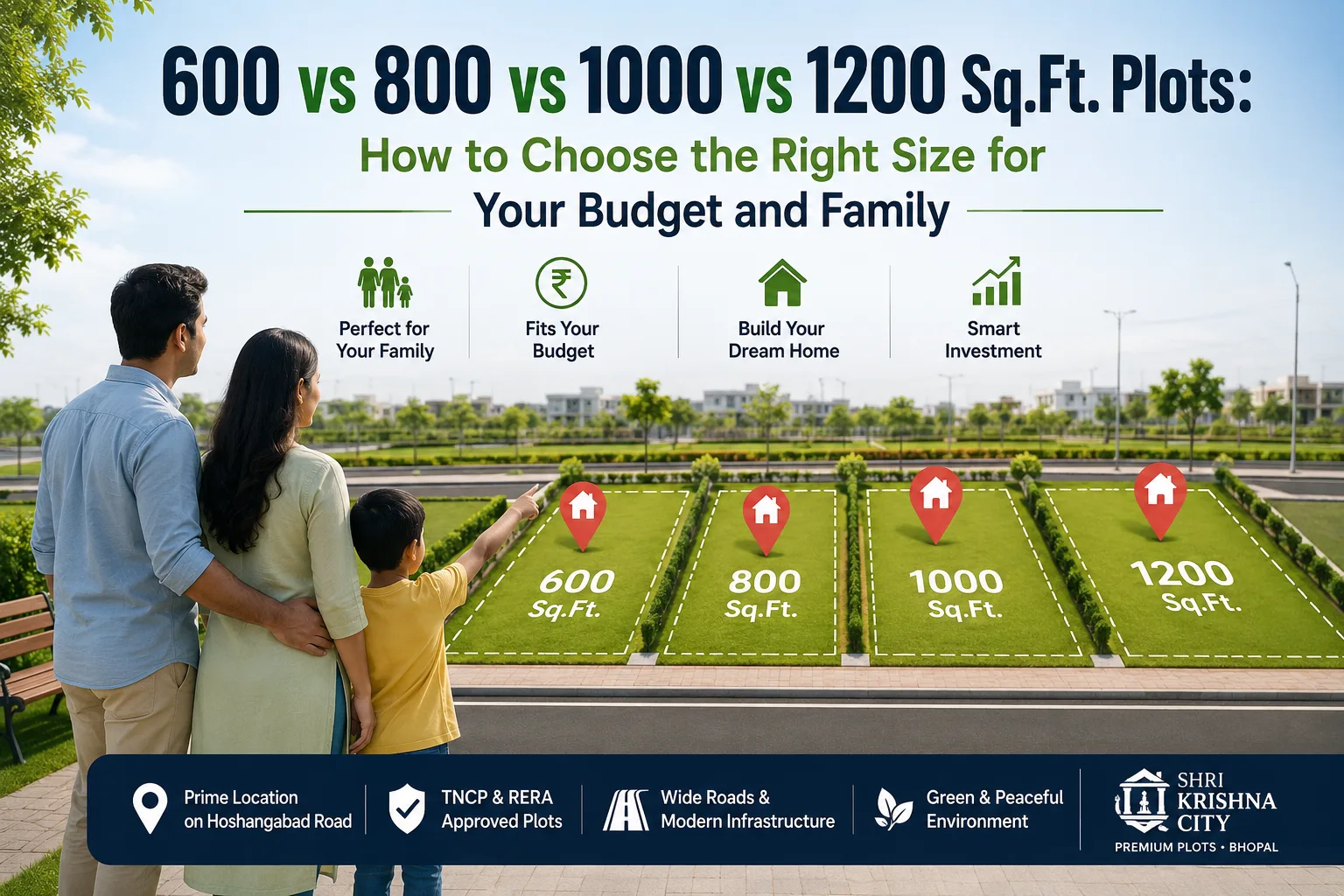
For example, a family may purchase a 600, 800, 1000 or 1200 sq. ft. plot and later construct a house based on its budget and lifestyle.
Why Do People Buy Residential Plots?
Some common reasons include:
- Freedom to plan the house
- Choice of house design
- Flexibility in construction
- Possibility of constructing in stages
- Control over room sizes and layout
- Option to plan parking and open space
- Long-term property ownership
However, buyers should also consider construction costs, approvals, contractors, materials and the time required to complete the house.
What Is a Ready-to-Move House?
A ready-to-move house is a completed residential property that can generally be occupied after completing the required purchase and possession formalities.
The house may already include features such as:
- Bedrooms
- Kitchen
- Bathrooms
- Parking
- Flooring
- Electrical fittings
- Doors and windows
- Other built-in features
The biggest advantage is convenience. Instead of purchasing land and managing construction, the buyer purchases an already-built property.
Residential Plot vs Ready-to-Move House: Quick Comparison
| Factor | Residential Plot | Ready-to-Move House |
|---|---|---|
| Construction | Buyer constructs the house | House is already constructed |
| Customisation | High | Limited |
| Moving In | Takes time | Usually faster |
| Construction Management | Required | Not required |
| Design Freedom | More flexibility | Depends on existing design |
| Initial Planning | Land purchase + construction planning | Property selection and purchase |
| Budget Control | Construction can be planned in stages | Mostly based on property price |
| Maintenance | Starts mainly after construction | Starts immediately after possession |
| Personal Layout | Can be designed as required | Existing layout |
| Long-Term Planning | Flexible | Depends on existing property |
1. Cost: Plot vs Ready-to-Move House
Cost is one of the first things buyers should compare.
With a residential plot, the purchase cost is only one part of the overall budget. You also need to plan for:
- Construction
- Architectural design
- Labour
- Building materials
- Electrical work
- Plumbing
- Flooring
- Painting
- Doors and windows
- Approvals and other applicable expenses
A ready-to-move house combines the land and construction into one property purchase, although buyers should still account for registration, furnishing, maintenance and other applicable costs.
Tip for Buyers
Don’t compare only the plot price with the house price.
Instead, calculate the estimated total cost of owning and completing the property.
2. Construction Time
This is an important difference.
If you buy a plot, you need to plan and construct your house before moving in. The timeline depends on your design, approvals, contractor, materials, labour and construction progress.
A ready-to-move house can reduce this waiting period because the property has already been constructed.
Which Matters More?
If you need a home immediately, a ready property may fit your timeline better.
If you can wait and want to create a home according to your requirements, a plot may provide greater flexibility.
3. Freedom to Design Your Home
This is one of the biggest advantages of buying a residential plot.
You can plan your home based on your family’s requirements, subject to applicable building rules and approvals.
For example, you may want:
- Larger bedrooms
- A spacious kitchen
- A dedicated study room
- Ground-floor bedroom for parents
- More parking space
- A balcony
- Garden space
- Future additional floors
With a ready-to-move house, the basic structure and layout are already decided.
4. Personalisation and Lifestyle
Every family has different needs.
A young couple may prefer a compact home, while a larger family may need additional bedrooms and parking.
When you purchase a plot, you can plan the house around your lifestyle.
A ready-to-move house, on the other hand, offers convenience but may have less scope for major structural changes.
5. Location Matters More Than Property Type
Whether you choose a plot or a ready house, location should be carefully evaluated.
Before buying property in Bhopal, consider factors such as:
- Road connectivity
- Nearby schools
- Hospitals
- Markets
- Public transport
- Employment areas
- Water and electricity availability
- Existing development
- Future development around the area
A good property decision is not only about the type of property. The surrounding location and infrastructure are equally important.
6. Legal Documents and Approvals
Legal verification is essential for both plots and ready-to-move properties.
For a residential plot, buyers should carefully verify relevant documents relating to:
- Ownership
- Title
- Land use
- Layout approval
- Applicable development permissions
- Encumbrances
- Registration
- RERA status, where applicable
For a ready-to-move house, buyers should additionally check relevant property and construction documents, approvals and possession-related paperwork.
Important
Never rely only on a brochure or verbal promise. Buyers should verify property documents with qualified legal professionals or relevant authorities before making a purchase.
7. Maintenance and Construction Responsibilities
A ready-to-move house gives you an existing structure, but it also means you inherit the property’s current condition.
You should inspect:
- Walls
- Flooring
- Plumbing
- Electrical systems
- Doors and windows
- Roof
- Water supply
- Drainage
- Parking
With a plot, there is no existing house to maintain initially, but the buyer must manage the construction process.
8. Financing and Budget Planning
Your financing requirements can differ depending on whether you purchase land or a completed house.
Before making a decision, understand:
- Your available savings
- Loan eligibility
- Down payment
- Interest cost
- Construction budget
- Monthly EMI
- Registration and other purchase expenses
- Emergency funds
If purchasing a plot and constructing later, it is especially important to prepare a separate construction budget.
9. Plot vs Ready House for Future Family Needs
Think about your family’s requirements not only today but also several years from now.
Ask yourself:
Will my family grow?
Will I need more bedrooms?
Do I need additional parking?
Could I require another floor in the future?
Would I prefer a customised home?
If your requirements may change significantly, a residential plot can provide greater flexibility for future planning, subject to applicable rules and approvals.
Residential Plot or Ready-to-Move House: Which One Should You Choose?
There is no single answer that works for every homebuyer.
A Residential Plot May Suit You If:
- You want to design your own house.
- You are comfortable waiting for construction.
- You want greater control over the layout.
- You have a long-term home plan.
- You want to decide the construction style and features.
- You want to plan construction according to your budget.
A Ready-to-Move House May Suit You If:
- You want to move into a home sooner.
- You don’t want to manage construction.
- You prefer an existing structure.
- You want to see the actual property before purchasing.
- You have a clear idea of the house size and layout you need.
Why Residential Plots Can Be an Option for Bhopal Homebuyers
For buyers who want to build a personalised home, a residential plot can offer an alternative to purchasing an already-built house.
Instead of adjusting your lifestyle around an existing layout, you can plan the home around your family’s requirements.
For example, you can decide where to place bedrooms, living areas, kitchen, parking and other spaces based on your needs and applicable construction rules.
This approach can be particularly useful for buyers who are planning their long-term family home in Bhopal.
Things to Check Before Buying a Residential Plot in Bhopal
Before purchasing a plot, don’t make your decision only based on price.
Check:
1. Location
Understand the area’s connectivity and nearby facilities.
2. Legal Status
Verify ownership and relevant property documents.
3. Approvals
Check applicable layout, development and planning approvals.
4. Road Access
Confirm the plot has proper access from the relevant road.
5. Basic Infrastructure
Check electricity, water, drainage and road development.
6. Plot Dimensions
Look at the actual length, width and shape of the plot.
7. Total Budget
Consider registration, construction and other applicable expenses.
8. Future Requirements
Think about the type and size of home you may want to build.
Final Thoughts
Choosing between a residential plot and a ready-to-move house in Bhopal depends on your personal priorities.
A ready-to-move house offers convenience and can reduce the waiting time before moving in. A residential plot provides more flexibility to plan and construct a home according to your family’s requirements.
Before making the final decision, compare the total cost, location, legal documents, approvals, construction requirements and long-term goals.
For buyers who are not in a hurry and want to create a personalised home, exploring residential plots in a planned development can be worth considering.
Frequently Asked Questions (FAQs)
1. Is it better to buy a plot or a ready-made house?
It depends on your requirements. A plot offers greater flexibility for designing and constructing your own home, while a ready-made house offers convenience and quicker occupancy.
2. Is buying a residential plot a good option in Bhopal?
A residential plot can be an option for buyers who want to build their own home. However, buyers should evaluate location, legal documents, approvals, infrastructure and their long-term budget before purchasing.
3. What should I check before buying a plot in Bhopal?
Check ownership, title documents, applicable approvals, land use, road access, infrastructure, plot dimensions and other relevant legal documents.
4. Is a plot cheaper than a ready-to-move house?
Not necessarily. A plot may have a lower initial purchase price, but construction costs must be added to calculate the total cost of building a house.
5. Can I construct my own house on a residential plot?
Generally, residential plots are purchased for residential construction, but construction must follow applicable local building regulations, approvals and development rules.
6. What is the difference between a residential plot and a ready-to-move house?
A residential plot is land on which you can construct a home, while a ready-to-move house is an already-constructed residential property.
7. Which is better for first-time homebuyers: plot or ready house?
It depends on the buyer’s budget, construction experience, timeline and housing requirements. First-time buyers should compare the complete cost and responsibilities associated with both options.
8. How much time does it take to build a house on a plot?
The construction timeline varies depending on the house design, approvals, contractor, labour, materials, weather and project size.
9. What documents are required when buying a residential plot?
The required documents can vary depending on the property and jurisdiction. Buyers should verify ownership, title, applicable approvals, registration records and other relevant documents with qualified professionals.
10. Can I build a customised house on a residential plot?
Yes, one of the main advantages of purchasing a plot is the ability to plan a customised home, subject to applicable building regulations and approvals.